Breaking Free: Reclaiming Human Scale in a World of Systems
-
NeighbourGood NZ

- Jun 25, 2026
- 6 min read
This essay follows Open Source, Open Data, and an Open Future.
If open source and open data are about transparency in technology, then the next question is much larger: How do we create a society that serves people, rather than people serving systems?
Many of us have a nagging feeling that something is not quite right. We are surrounded by more technology than any generation in history. We have unprecedented access to information. We can communicate across the world in seconds.
Yet many people feel more anxious, more indebted, more isolated, and less in control of their lives than previous generations. Why?
A World Built on Dependency
Modern society has become extraordinarily specialised. Most people no longer grow food. Most people do not build their own homes. Most people cannot repair their own tools. Most people do not know where their water comes from, where their waste goes, or how their electricity is generated.
We depend on vast systems that stretch across continents — supermarkets, banks, insurance companies, telecommunications providers, energy companies, governments, global supply chains.
Most of the time these systems work remarkably well. The problem comes when dependence becomes so complete that people lose their ability to function without them. Resilience is replaced by reliance. Citizens become consumers. Communities become markets. Neighbours become strangers.
At NeighbourGood we describe the alternative in our Living Manifesto: autonomy, practical skills, and neighbours who can help one another when systems falter.
The Attention Economy
Modern business has discovered that human attention is valuable. Very valuable. The largest corporations in the world are not simply selling products — they are competing for attention.
Every notification, every alert, every advertisement, every algorithmically selected video, every headline designed to provoke outrage, every endless scroll — all are competing for the most valuable resource in existence: your awareness.
The more time people spend distracted, reactive, and emotionally triggered, the less time they spend creating, connecting, learning, or participating in their communities.
The result is a population that is highly informed about distant events but often disconnected from its immediate surroundings.

Debt as a Way of Life
Previous generations often viewed debt as something to avoid. Today it has become normal — student debt, credit cards, consumer finance, vehicle loans, mortgages extending over decades.
Entire economies are now built on the assumption that future labour will pay for present consumption.
Debt is not inherently evil. Used carefully, it can help people build productive assets. But when debt becomes the foundation of everyday life, it changes behaviour.
People become less free to change jobs, less free to relocate, less free to challenge authority, less free to experiment, less free to pursue meaningful work. Freedom and debt rarely travel together.
Our Neighbournomics section explores economic models that reduce dependence on distant lenders — timebank, gifting, and local exchange among people who know one another.
The Industrialisation of Daily Life
Many aspects of life that were once community activities have become industries. Food became agribusiness. Health became healthcare. Education became credentialing. Housing became investment. Eldercare became a service sector. Childcare became an industry.
The result is not necessarily malicious. Often these systems emerged with good intentions. But over time, industrial systems tend to optimise for efficiency, scale, and revenue rather than human connection. Something valuable gets lost.
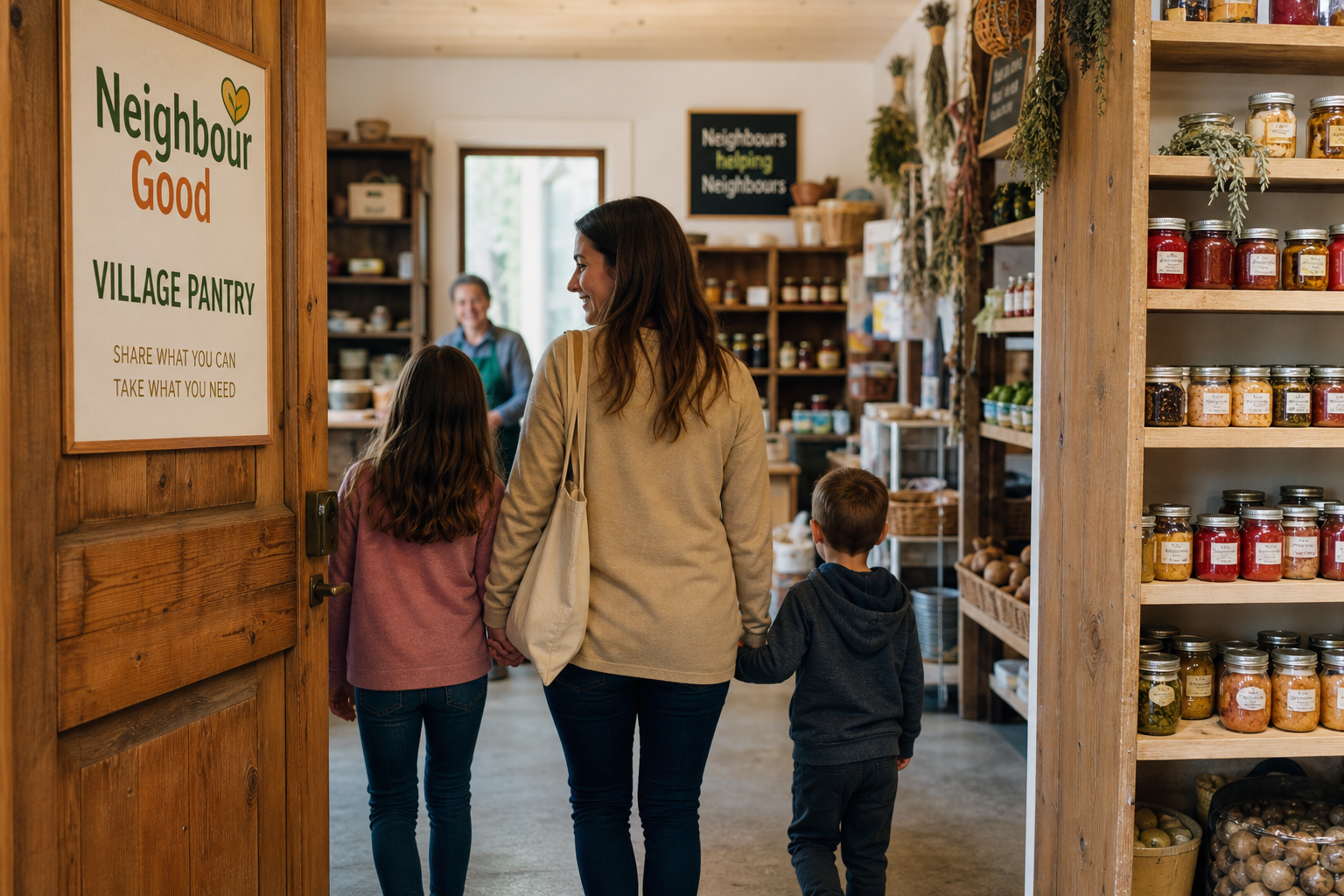
The conscious businesses in our manifesto are meant to sit alongside community life — not replace the pantry, the workshop, or the shared meal.
Education or Training?
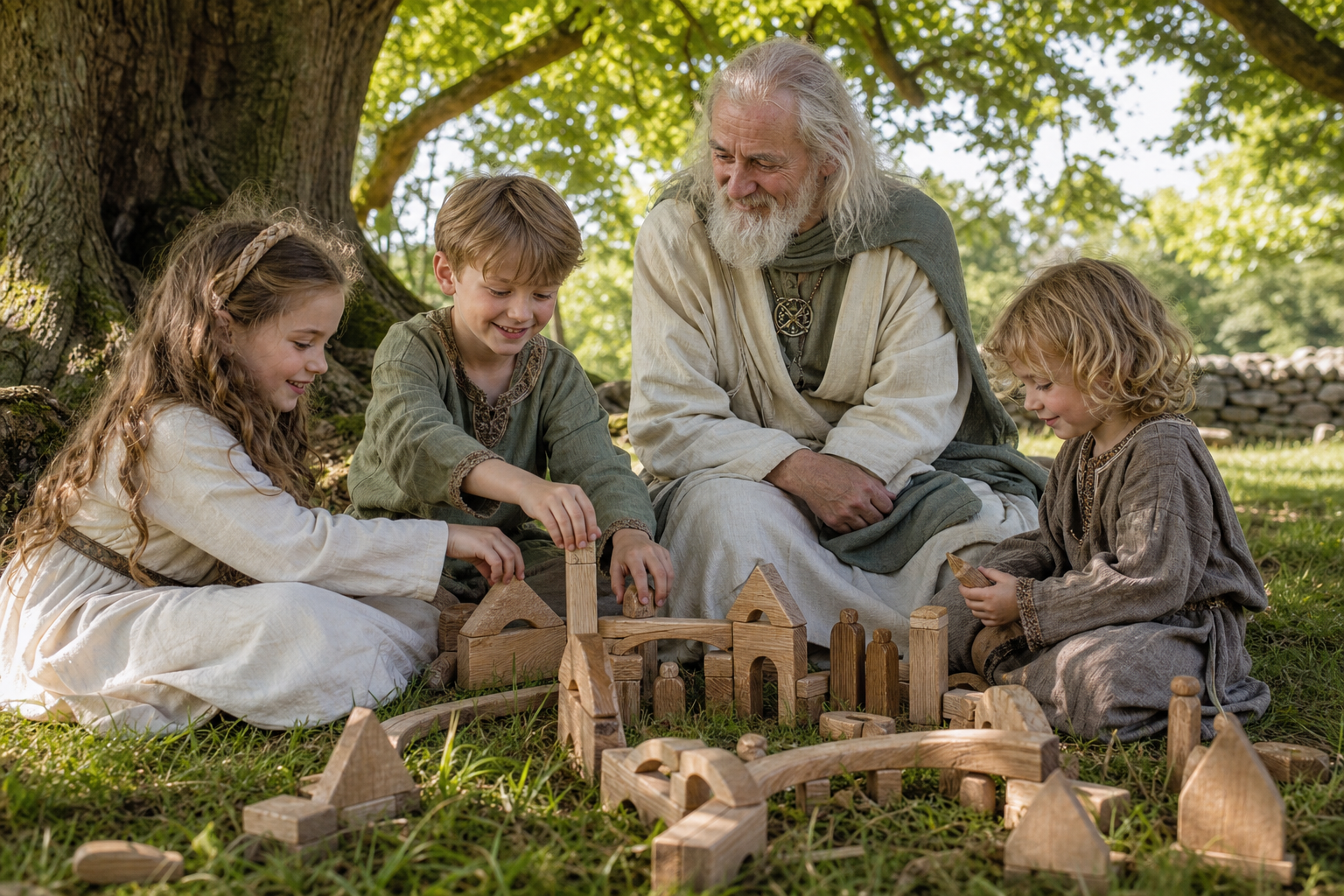
Education should inspire curiosity. It should encourage questioning. It should help people discover who they are.
Yet many educational systems increasingly resemble workforce preparation programmes. Students are taught what to think about. Less often how to think.
The most valuable skills of the coming century may not be technical. They may be discernment, creativity, adaptability, empathy, and wisdom — the ability to ask good questions, cooperate, learn continuously, and remain human in an increasingly automated world.
See adult education in the Living Manifesto for how NeighbourGood intends to keep learning woven through village life.
What Happens When AI Arrives?
Artificial intelligence will accelerate many existing trends. Routine work will disappear. Administrative jobs will shrink. Knowledge will become increasingly abundant.
The challenge will no longer be accessing information. The challenge will be understanding it.
Human value will shift away from memorisation and towards judgment. Away from routine and towards creativity. Away from information and towards wisdom.
This transition may be uncomfortable. But it also creates an opportunity to redesign society around human flourishing rather than endless productivity.
Our companion essay on open source, open data, and AI argues that distributed, inspectable technology serves communities better than concentrated corporate power.
Reclaiming Human Scale
The solution is not to abandon technology. Nor is it to retreat from society. The solution is balance.
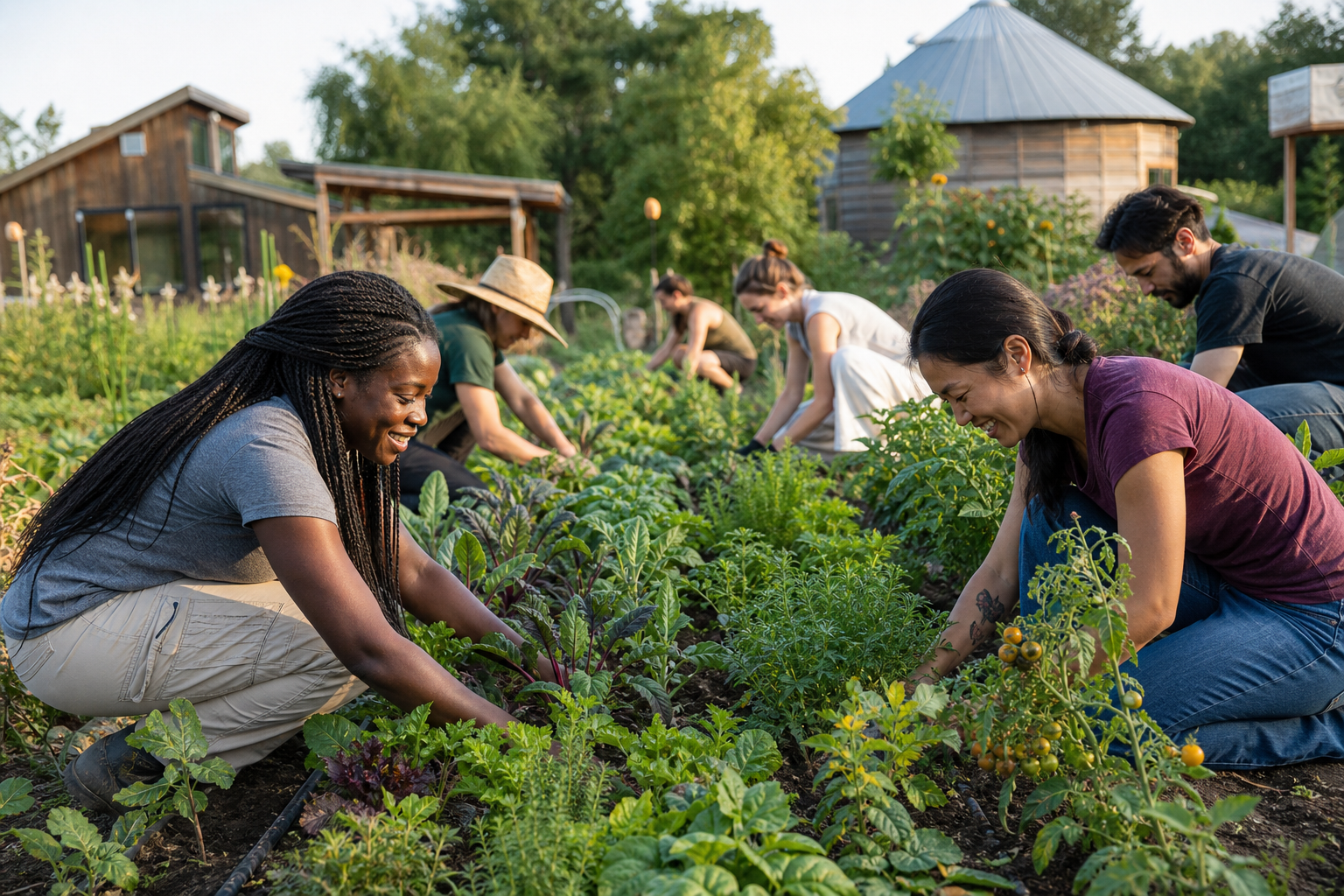
To consciously rebuild the things that make life meaningful: know your neighbours; grow some food; learn practical skills; repair things; volunteer; support local businesses; spend time in nature; join clubs; create art; share knowledge; help younger people; listen to older people.
Build communities that can solve problems together. The future may belong less to those with the largest institutions and more to those with the strongest relationships.
The food and village design sections of our manifesto describe how NeighbourGood puts these principles into land, buildings, and daily rhythm.
Freedom Through Participation
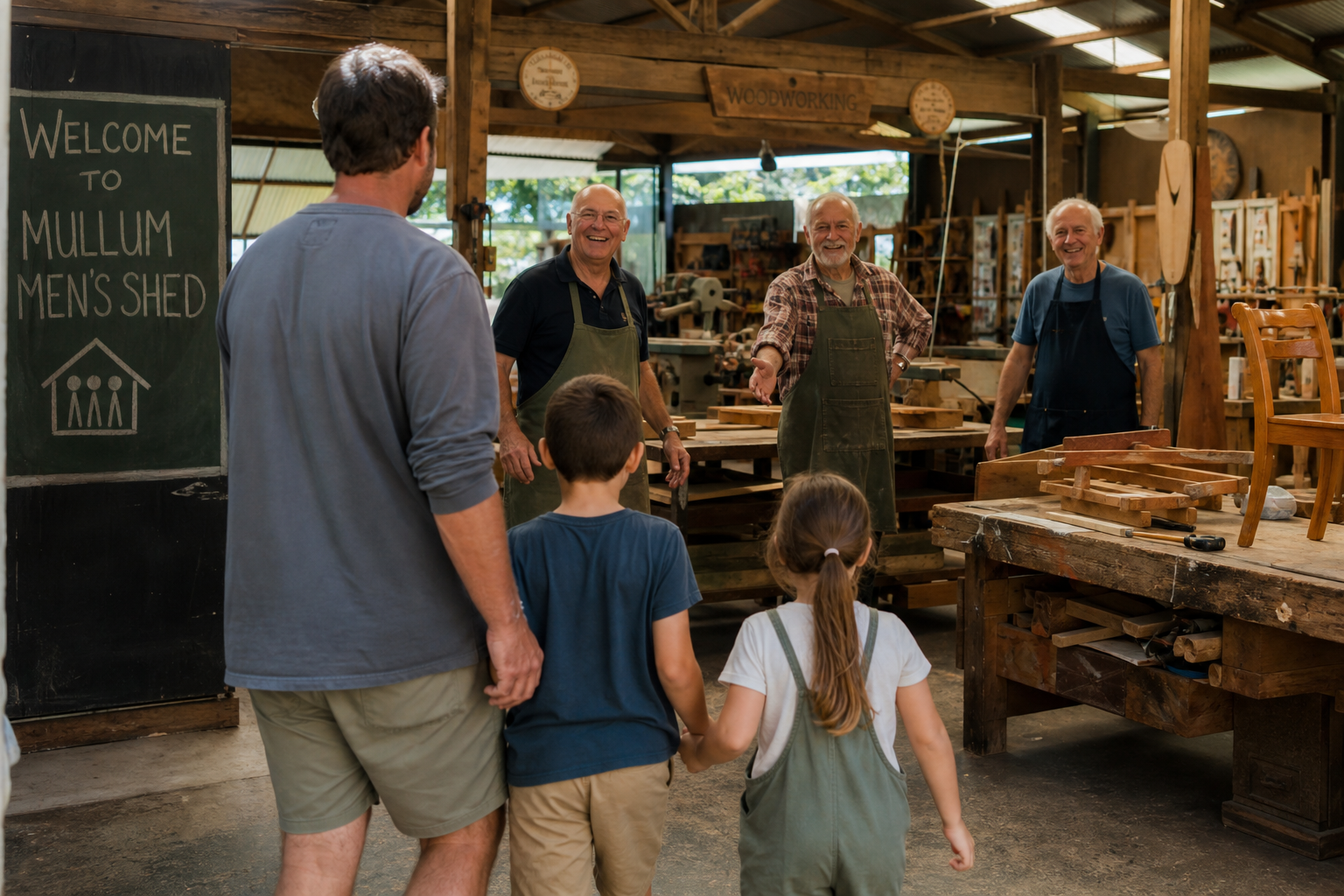
Real freedom is not isolation. It is participation. It is knowing that if something breaks, people around you will help. It is having useful skills. It is being trusted. It is contributing. It is belonging.
Healthy societies are not built from the top down. They emerge from countless acts of cooperation between ordinary people.
The more capable our communities become, the less vulnerable they are to distant decisions made by people they will never meet.
Sociocratic governance and internal exchange structures are how NeighbourGood encodes participation — not as a slogan, but as practice.

The Path Forward
The path forward is not fear — it is awareness. Not anger — understanding. Not division — cooperation. Not dependency — capability. Not consumption — contribution.
The future will be shaped by millions of small choices: what we buy, who we support, how we spend our time, what we teach our children, whether we strengthen our communities or withdraw from them, whether we choose convenience alone, or resilience as well.
The systems around us are powerful. But they are not more powerful than people working together. And perhaps that is the most important thing to remember.
Read the Living Manifesto, our essay on open source and open data, or comment on the Living Manifesto (Google Doc).